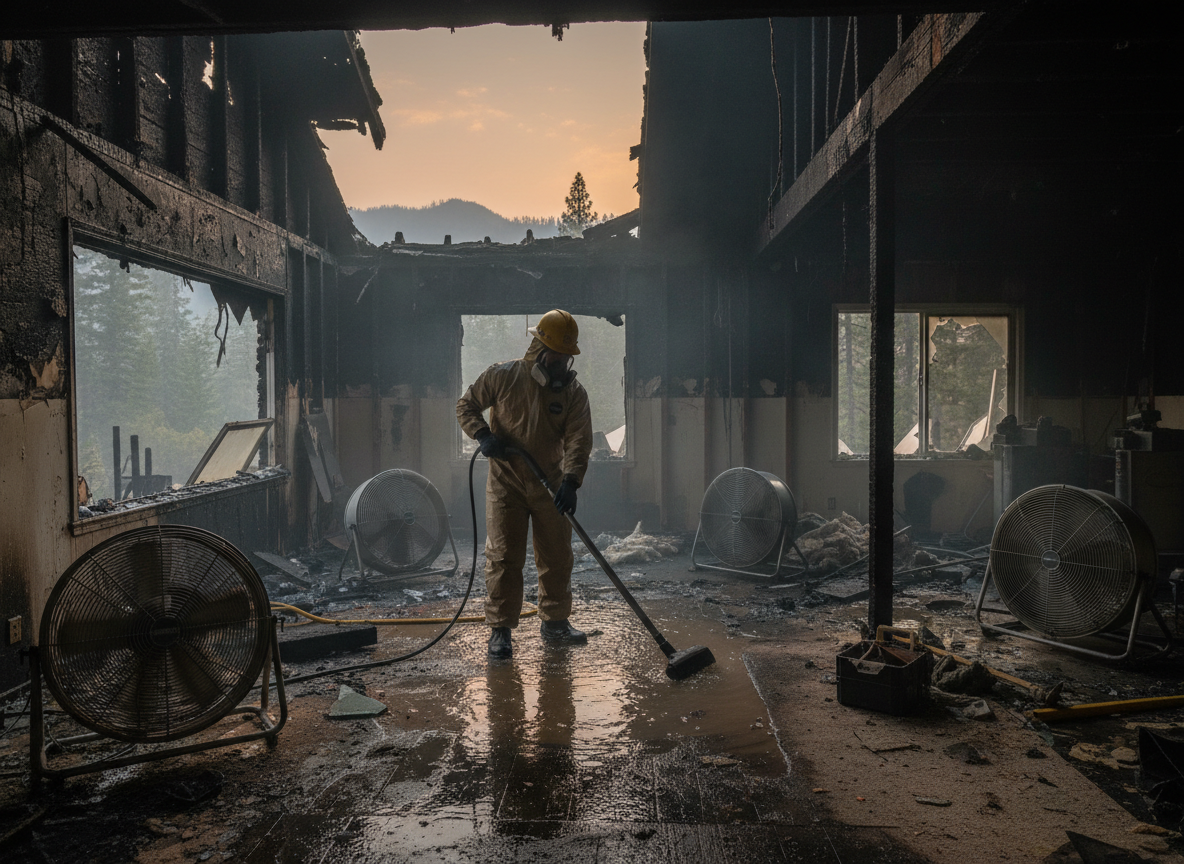
Firefighting efforts in Cedarpines Park often introduce large volumes of water into structures already stressed by flames, saturating insulation, subfloors, and wall cavities in older mountain cabins common throughout San Bernardino County. These homes frequently feature tight spaces and limited access due to steep terrain near Crestline and Lake Arrowhead, which complicates extraction and requires specialized equipment to reach hidden moisture pockets before they freeze during snowy winters.
Residual water left untreated can lead to mold within 48 hours, especially when cool mountain temperatures slow evaporation and allow ice formation inside framing. Remediation crews must use moisture meters and thermal imaging to map affected zones, then apply targeted drying protocols that account for the region's high humidity spikes after winter storms. Failure to address these conditions often results in recurring issues in attics and crawl spaces typical of Cedarpines Park builds.
Edge cases include water migrating into electrical systems or compromising load-bearing beams in post-fire structures, requiring coordination with local building codes in San Bernardino County before full restoration. Materials like plaster and hardwood floors common in the area absorb and retain water differently than modern drywall, demanding extended monitoring to confirm complete drying.
Technician insight
In Cedarpines Park, the thing that catches most people out with water damage remediation after fire is how snowy winters let residual moisture freeze inside wall cavities of older cabins, masking the problem until spring thaw triggers hidden mold that spreads fast in the cool mountain climate.
Suppression Water in Crestline-Adjacent Cabin
A Cedarpines Park home near the Crestline border suffered heavy water intrusion from firefighting efforts that soaked through the roof into attic insulation. We found ice forming in the cavities due to overnight freezes and used targeted heaters plus dehumidifiers to thaw and extract without further structural harm. Once dry, we treated for soot residue and confirmed levels with meters before handing off to rebuild crews.
How it works
- 1
Initial Assessment
Technicians arrive 24/7 at the Cedarpines Park site to evaluate fire suppression water spread using moisture detection tools suited for mountain conditions.
- 2
Water Extraction
High-capacity pumps and vacuums remove standing water from affected areas while navigating steep driveways and tight cabin layouts common near Crest Forest Drive.
- 3
Drying and Dehumidification
Industrial air movers and dehumidifiers run continuously, adjusted for cool temperatures and potential freezing that can occur during Cedarpines Park winters.
- 4
Sanitization and Monitoring
Antimicrobial treatments address soot and contaminants, followed by daily checks until moisture levels stabilize in wall cavities and subfloors.
Pricing
Costs depend on water volume, access challenges from mountain terrain, and extent of hidden damage in older Cedarpines Park homes.