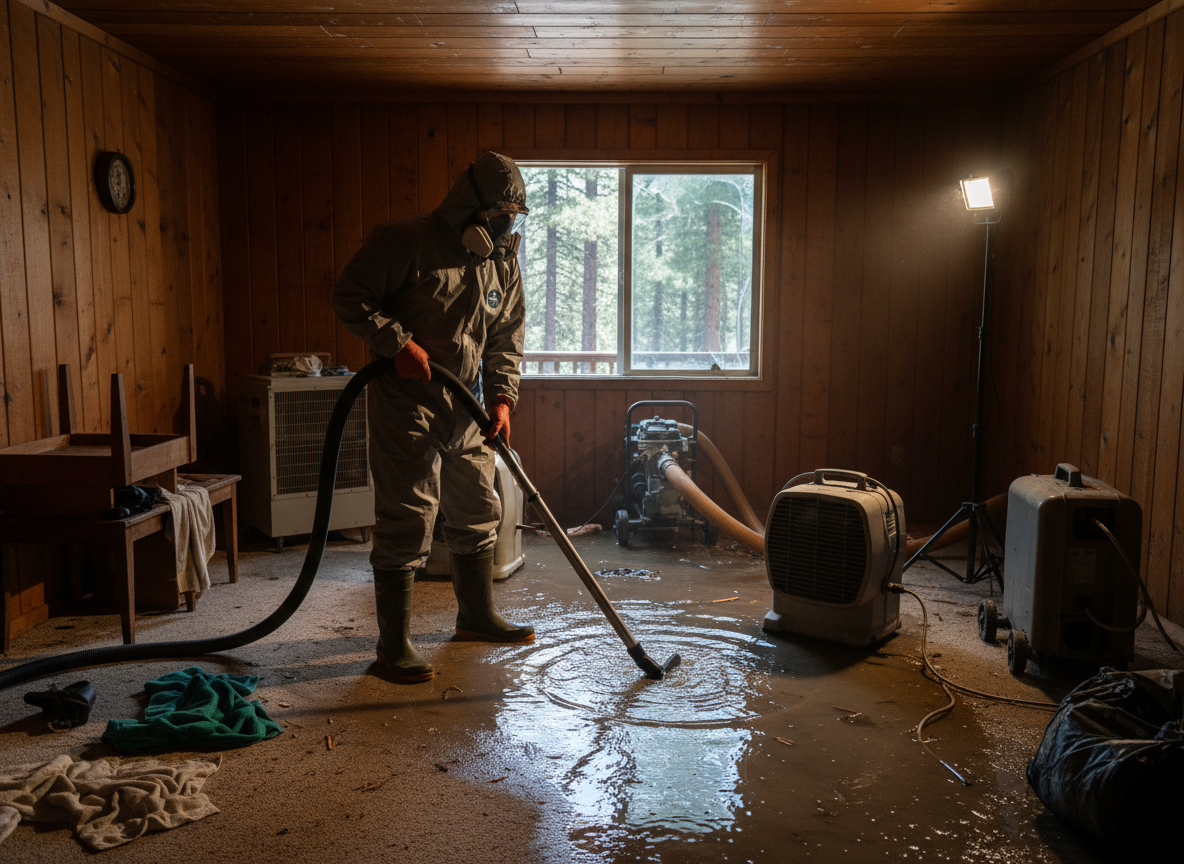
Emergency water cleanup in Cedarpines Park starts with locating the source and stopping active flow before extraction begins. In San Bernardino County mountain homes, older construction often routes supply lines through unheated crawl spaces where cool temperatures and snowy winters allow pipes to freeze and split. Once water spreads across slab or pier foundations, crews use submersible pumps followed by truck-mounted extraction to pull standing water from carpet pads and hardwood, preventing wicking into wall cavities that stay damp longer in the local climate.
After bulk removal, technicians map moisture with meters and set up air movers plus dehumidifiers sized for the square footage and ceiling height typical of Cedarpines Park cabins. The same cool mountain air that caused the initial freeze slows evaporation, so equipment must run longer than in valley locations to reach dry standards. Failure to address trapped moisture behind baseboards or under vinyl often leads to musty odors weeks later when snowmelt raises humidity again.
Final verification includes checking adjacent rooms and any lower-level storage areas common in the hilly terrain between Cedarpines Park and Crestline. Contents are inventoried and moved to a dry zone on site when possible, while affected structural materials are noted for later repair. Homeowners receive a written drying log before equipment is removed so they can confirm conditions have returned to normal.
Technician insight
In Cedarpines Park, the thing that catches most people out with Emergency water cleanup is water that travels under the house into crawl spaces during snowy winters. The cool mountain climate keeps those areas damp long after the visible leak is fixed, so hidden mold starts before homeowners notice. Checking under the structure right away changes how much material has to be removed later.
Burst Supply Line Under Cabin
A supply line froze and split in a Cedarpines Park home during a cold snap. Water reached the crawl space and soaked insulation plus subflooring. Crews extracted the water, set drying equipment, and monitored readings until levels matched surrounding dry wood. The home stayed habitable with no mold growth after the job.
How it works
- 1
Source Stop and Safety
Locate and shut off water, assess electrical risks, and secure the area.
- 2
Water Extraction
Remove standing water with pumps and wands from floors and low areas.
- 3
Moisture Mapping
Use meters to identify wet materials in walls, floors, and crawl spaces.
- 4
Drying and Monitoring
Place equipment and track progress until readings meet dry standards.
- 5
Final Walk-Through
Review conditions with the homeowner and document completion.
Pricing
Upfront quotes after inspection; cost varies with water volume, affected square footage, and drying duration in mountain conditions.