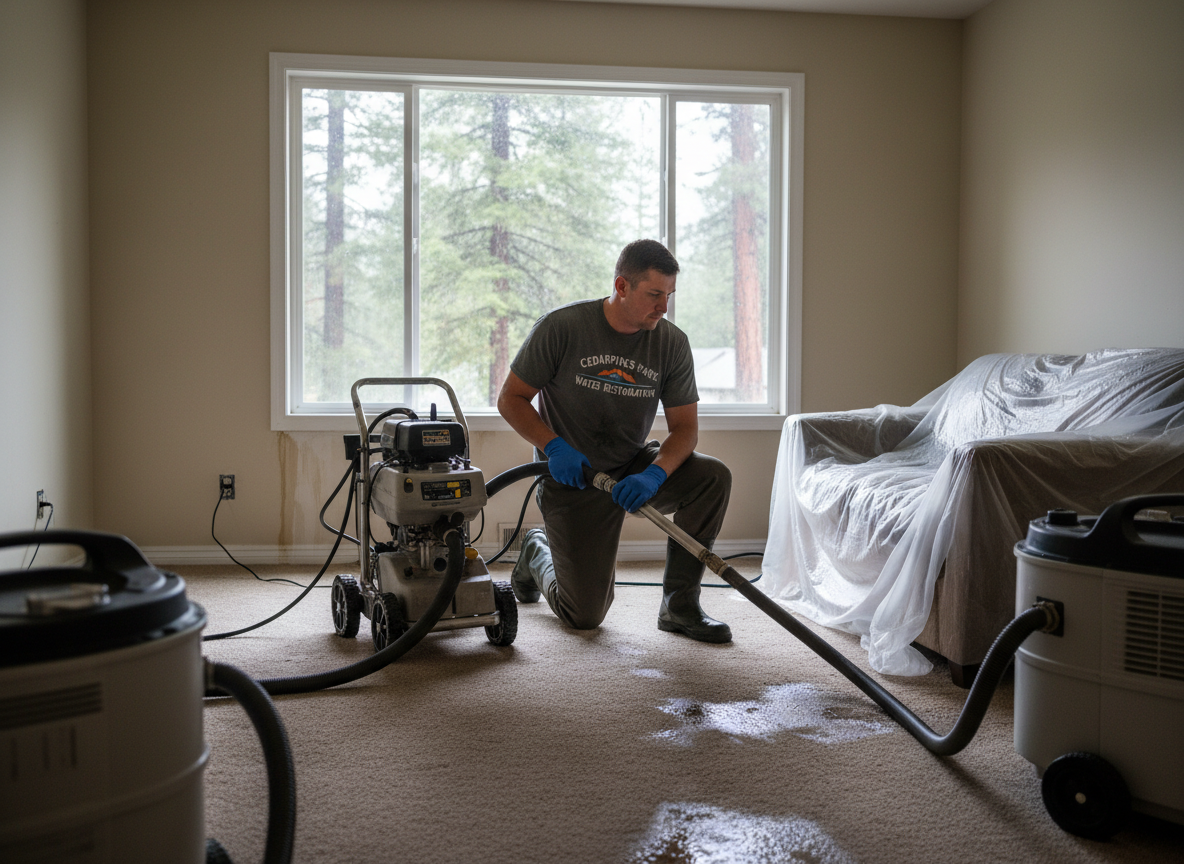
Cedarpines Park sits at elevation in San Bernardino County where cool mountain winters bring repeated freeze-thaw cycles that stress copper and PEX lines in older cabin-style homes. Leaks often appear first at joints near crawl spaces or under decks on sloped lots along Crest Forest Drive. Snowmelt then channels water toward foundations, saturating insulation and subfloors before residents notice ceiling stains or musty odors in adjacent rooms.
Restoration crews begin by isolating the supply line at the meter, then use moisture meters and infrared cameras to trace water behind knotty-pine walls and under tongue-and-groove flooring common in the area. Once the leak source is confirmed, affected materials are removed to prevent hidden mold growth encouraged by the region’s higher winter humidity. Drying equipment is staged to account for limited airflow in compact mountain layouts, with dehumidifiers running longer than in valley homes.
After structural drying, replacement focuses on matching existing finishes while upgrading vulnerable sections to freeze-resistant materials. Final verification includes checking neighboring units in clustered Cedarpines Park neighborhoods because shared plumbing runs can carry moisture across property lines. Homeowners receive a written drying log and photos for insurance documentation.
Technician insight
In Cedarpines Park, the thing that catches most people out with Water leak restoration is snowmelt tracking under older pier-and-beam foundations along Crest Forest Drive, where water travels laterally through the soil and re-enters walls days after the initial freeze.
Winter Pipe Burst Near Crestline Border
A homeowner noticed ceiling discoloration after a cold snap. Inspection revealed a split line under the kitchen floor that had allowed water to travel into the crawl space. Crews isolated the line, removed saturated subfloor sections, and ran drying equipment for four days until readings stabilized. The home was returned to pre-loss condition without mold development.
How it works
- 1
On-Site Assessment
Technician arrives within hours, locates the leak source, and maps moisture spread using meters suited to mountain construction.
- 2
Water Removal and Containment
Standing water is extracted and barriers are placed to protect unaffected areas from cross-contamination.
- 3
Targeted Drying
Air movers and dehumidifiers run until readings return to normal, with daily checks to adjust for cold-weather conditions.
- 4
Repair and Restoration
Damaged drywall, flooring, and insulation are replaced, followed by final walkthrough and moisture verification.
Pricing
Upfront quotes provided after inspection; final cost depends on extent of hidden moisture and access challenges in sloped mountain lots.