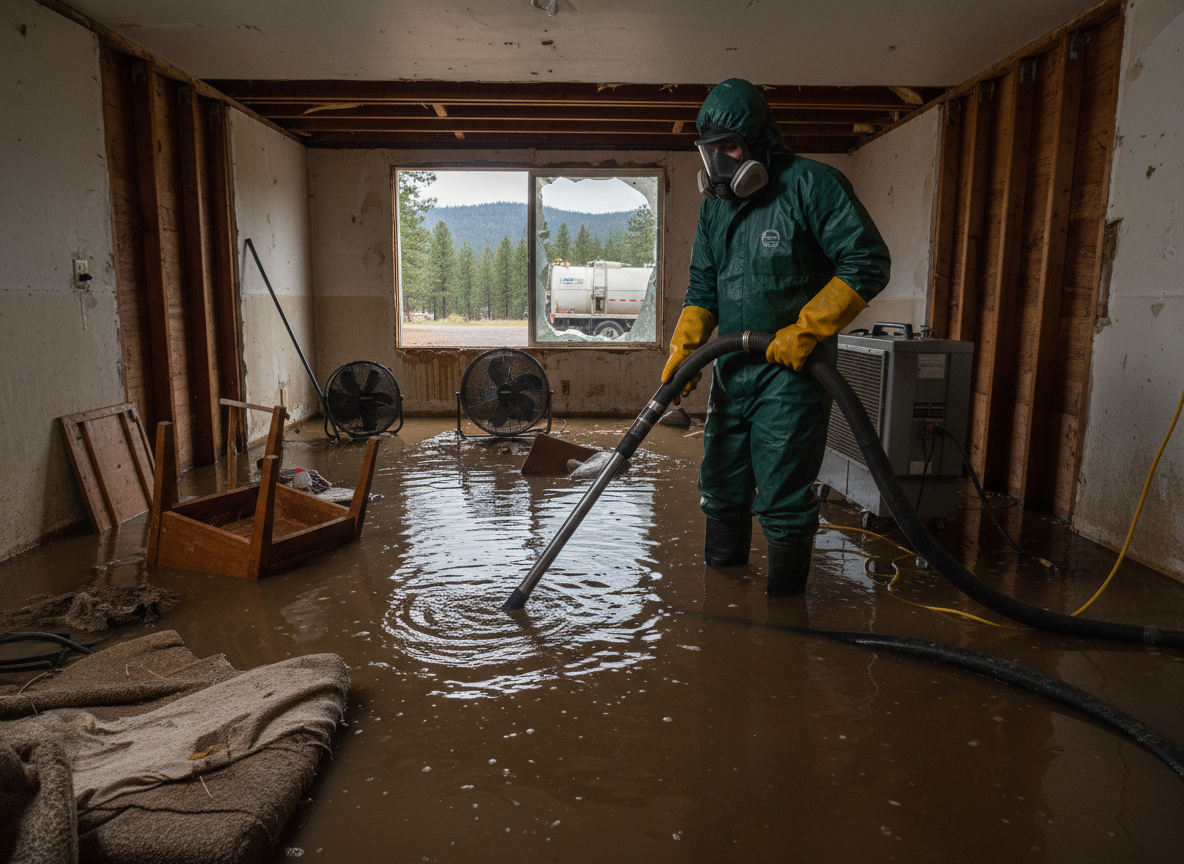
Sewage backups in Cedarpines Park often stem from older septic systems or clay pipe failures common in homes built before the 1980s along Crest Forest Drive and surrounding ridges. Snowy winters cause ground heave that cracks lines, sending effluent into crawl spaces where cool mountain temperatures slow evaporation. Technicians must extract standing waste immediately, then apply EPA-registered disinfectants rated for Category 3 water before any drying equipment runs, because residual pathogens survive longer in shaded mountain soil.
Access challenges multiply on steep lots near Lake Arrowhead and Crestline roads where narrow driveways limit equipment placement. Crews stage pumps and air movers on portable platforms to reach underfloor areas without disturbing surrounding pines. Contaminated insulation and subfloor sections are removed in sealed bags to prevent cross-contamination during transport down the mountain. Homeowners receive a written scope that notes any required permits from San Bernardino County Environmental Health before reconstruction begins.
Post-cleanup verification includes moisture mapping with infrared cameras and ATP swab testing to confirm surfaces meet residential re-occupancy standards. In winter jobs, supplemental heat is added gradually to avoid shocking frozen framing while still driving moisture out of joists. This sequence prevents hidden mold colonies that frequently appear months later in unheated mountain attics.
Technician insight
In Cedarpines Park, the thing that catches most people out with sewage cleanup is how frozen ground in winter traps effluent under older pier-and-beam homes along the ridges, so extraction must continue until soil moisture drops below 15 percent or the odor returns the next spring thaw.
Crawl Space Backup After Winter Freeze
A Cedarpines Park homeowner near Crest Forest Drive noticed sewage odors after a January thaw. Inspection revealed cracked clay pipe under the 1960s cabin releasing waste into the crawl space. We extracted the effluent, removed saturated insulation, disinfected joists, and ran drying equipment for four days until readings stabilized. The space passed testing and the family returned without further odor issues.
How it works
- 1
Site Assessment and Containment
Technicians arrive within hours, isolate the affected zone, and document moisture levels plus visible waste paths through the structure.
- 2
Extraction and Waste Removal
Standing sewage is pumped out, solid debris bagged, and all porous materials cut away for off-site disposal following county guidelines.
- 3
Disinfection and Drying
EPA-approved antimicrobials are applied, then industrial dehumidifiers and air movers run until wood moisture content returns to baseline readings.
- 4
Final Verification and Handover
Infrared scans and surface testing confirm the space is dry and safe; a written report is provided for insurance or county records.
Pricing
Cost depends on volume of waste, depth of penetration into crawl spaces, and winter access conditions; upfront written quotes provided before work starts.