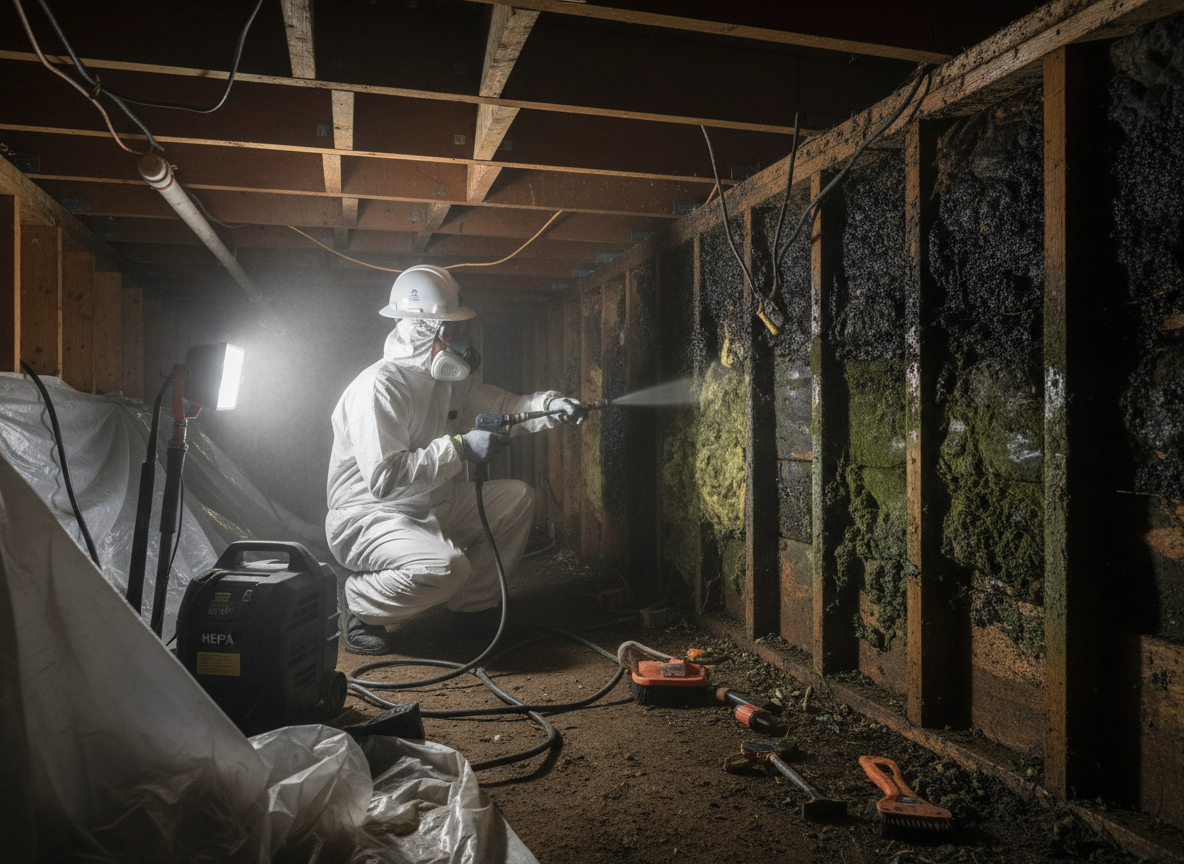
Crawl spaces in Cedarpines Park homes built on the slopes of San Bernardino County often lack modern vapor barriers, allowing snow melt from winter storms to raise humidity levels that promote mold on joists and insulation. Technicians must navigate tight access points under older cabins near Crest Forest Drive while identifying hidden growth that travels along plumbing penetrations. Edge cases include mold returning after partial drying because residual moisture from seasonal runoff pools against the foundation. Proper removal requires HEPA filtration and negative air machines to prevent spores from migrating into living areas during the work.
The cool damp air typical of Cedarpines Park and nearby Crestline slows evaporation, so crews use targeted dehumidification and air movers sized for the enclosed volume rather than whole-house units. Soil conditions here frequently include clay pockets that hold water against footings, creating recurring damp spots that standard bleach treatments miss. When insulation has absorbed moisture, full removal is needed instead of surface cleaning to avoid trapped mold behind the material. Local building practices from earlier decades left many crawl spaces without vents or with blocked ones, which changes the drying timeline compared to newer construction in flatter parts of the county.
Before starting crawl space mold removal, crews check for structural wood softening caused by prolonged exposure in homes set into hillsides around Lake Arrowhead. Containment barriers must account for the terrain slope so runoff does not re-enter the work zone during treatment. Post-removal verification includes moisture meter readings on all exposed surfaces because the mountain climate can reintroduce humidity within days if drying is incomplete. Homeowners sometimes overlook that mold in these spaces often connects to roof or gutter issues higher on the property, requiring coordination to prevent repeat growth.
Technician insight
In Cedarpines Park, the thing that catches most people out with crawl space mold removal is how snow melt from the slopes funnels directly under older homes along Crest Forest Dr, soaking dirt floors that never fully dry in the cool mountain air and letting mold spread behind insulation before anyone notices.
Snow Melt Intrusion Under Crest Forest Home
Heavy winter runoff had entered the crawl space of a Cedarpines Park residence, creating mold along floor joists. Inspection revealed blocked vents and no vapor barrier allowing ongoing dampness. We contained the area, removed affected insulation, dried the space with dehumidifiers, and installed a basic vapor barrier to block future moisture. The homeowner reported improved air quality and no recurrence after the first post-winter check.
How it works
- 1
Initial Assessment
Technicians inspect the crawl space for visible mold, moisture sources, and access limitations typical of Cedarpines Park homes.
- 2
Containment Setup
Plastic barriers and negative air machines isolate the work area to keep spores from entering living spaces.
- 3
Mold Removal
HEPA vacuuming, scrubbing, and removal of affected insulation occur while addressing snow-melt pathways.
- 4
Drying and Verification
Dehumidifiers and air movers dry the space followed by moisture checks before any restoration.
- 5
Prevention Recommendations
Advice on vapor barriers and drainage improvements suited to local winter conditions is provided.
Pricing
Cost depends on crawl space size, mold extent, and access difficulty created by local terrain and older construction.