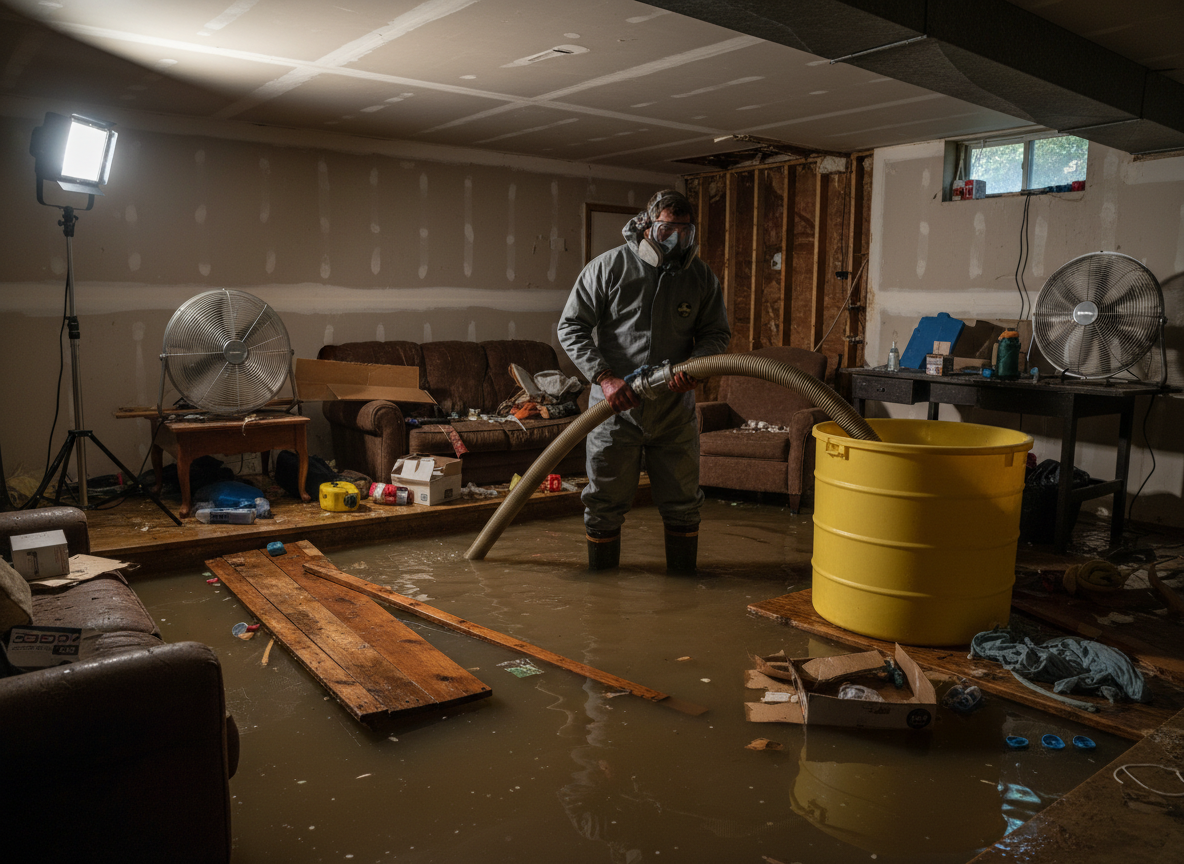
Cedarpines Park sits at elevation in San Bernardino County where heavy winter snowpack melts rapidly against older cabin foundations and split-level homes built into slopes. Water enters through unsealed cinder-block walls, cracked slabs, and window wells that collect runoff from Crest Forest Drive and surrounding ridges. Technicians extract standing water within hours, then deploy air movers and dehumidifiers calibrated for the cool, humid air that lingers after storms, preventing hidden mold growth between floor joists and behind cedar paneling common in local basements.
Snowmelt flooding often carries fine silt from the San Bernardino National Forest that settles into carpet pads and underlayment, requiring removal of saturated materials rather than simple drying. In homes near Lake Arrowhead and Crestline roads, older galvanized supply lines freeze and burst during January cold snaps, sending pressurized water into finished lower levels. Crews isolate the source, document affected drywall heights for insurance, and use moisture meters on concrete to confirm readings below 15 percent before reinstallation to avoid callbacks when spring rains return.
Terrain in Cedarpines Park funnels water toward lower lots, so cleanup includes grading checks around the foundation and temporary French-drain placement when grading has settled over decades. Electric panels in many 1960s–1970s homes sit low, creating shock hazards that must be addressed before extraction equipment enters. Work stops only after thermal imaging confirms no residual moisture behind built-in cabinetry or under stairwells that serve as common storage in mountain homes.
Technician insight
In Cedarpines Park, the thing that catches most people out with Basement flood cleanup is how quickly snowmelt runs down the slope behind homes on Crest Forest Drive and pools against the uphill foundation wall. Older cabins often lack proper drainage, so water sits against the cinder block for days before anyone notices. We always check the grading and the weep holes first because drying the basement alone will not stop the next storm from refilling it.
Snowmelt Intrusion on Uphill Lot
A homeowner on a side street off Crest Forest Drive noticed water rising in the basement after a warm January thaw. We found meltwater entering through unsealed block joints and a clogged window well. Extraction and targeted drying of the lower level took four days; we also cleared the exterior drainage path to reduce repeat risk.
How it works
- 1
Emergency Water Extraction
Technicians arrive within hours, pump out standing water, and remove saturated carpet and pad using truck-mounted equipment suited to narrow mountain driveways.
- 2
Source Identification
Inspect foundation walls, window wells, and supply lines for ongoing intrusion from snowmelt or burst pipes typical after Cedarpines Park cold fronts.
- 3
Drying and Dehumidification
Place commercial dehumidifiers and air movers, monitoring moisture levels daily until readings stabilize below local humidity norms.
- 4
Sanitization and Final Clearance
Apply antimicrobial treatment to affected surfaces and verify dryness with meters before allowing reconstruction to begin.
Pricing
Cost depends on water volume, depth of saturation, and whether finished materials must be removed; onsite assessment required for accurate scope.