Cedarpines Park sits at elevation in San Bernardino County where heavy winter snow followed by rapid melt sends water under older composition roofs and into unvented attics. Homes built from the 1960s through 1980s often have single-layer felt underlayment and minimal ridge venting, so even small ice-dam leaks soak insulation and sheathing before homeowners notice ceiling stains. We map moisture with infrared, remove wet cellulose or fiberglass, and treat affected rafters with EPA-registered antimicrobials while preserving the original knotty-pine tongue-and-groove where possible.
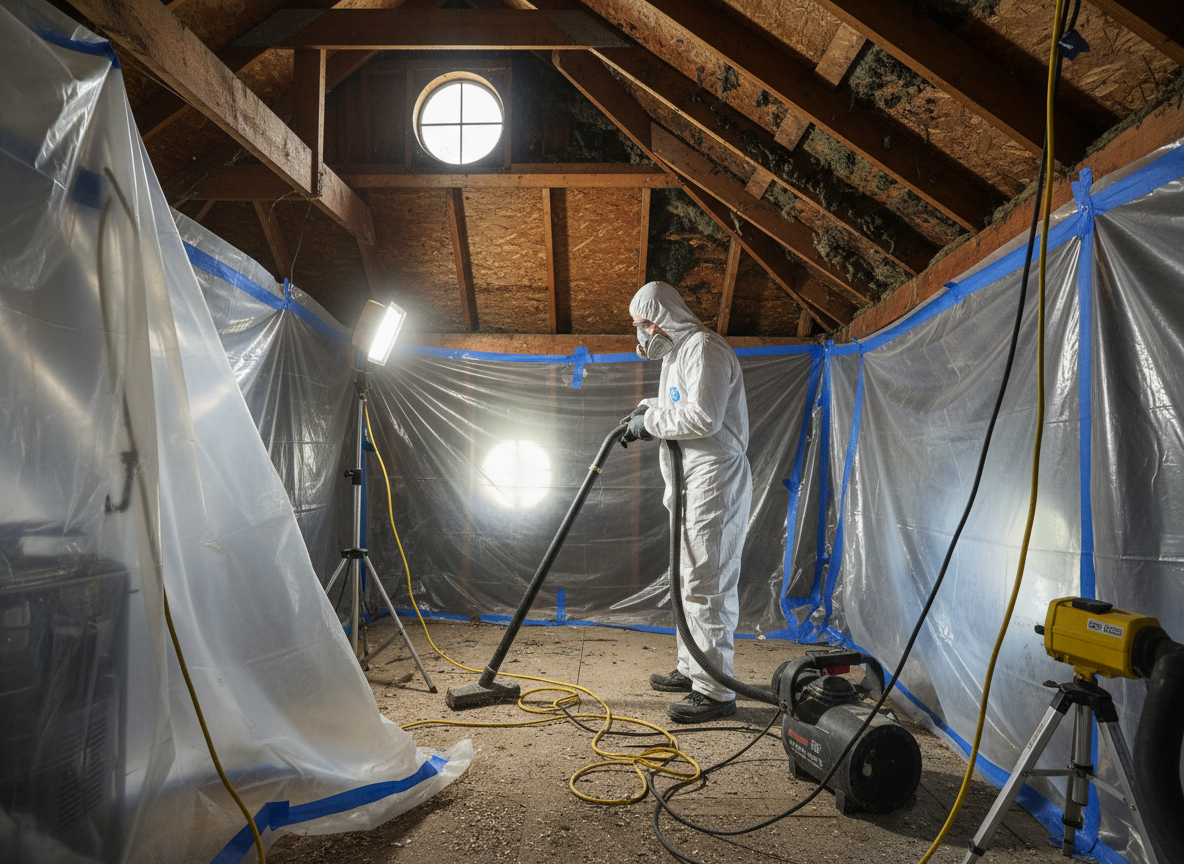
Access in these steep lots frequently means carrying equipment up narrow driveways or through second-story windows rather than standard attic hatches. We stage containment from the living space below using floor-to-ceiling plastic and negative air so spores do not migrate into occupied rooms during removal. After source correction we reinstall R-38 insulation and add gable and ridge vents sized for the roof pitch common on Crest Forest Drive and surrounding streets.
Nearby Lake Arrowhead and Crestline share the same micro-climate, so we see identical patterns on 40-year-old A-frames where bathroom exhaust fans vent directly into the attic. Sealing those ducts and adding inline fans to the exterior prevents recurrence without tearing out finished ceilings.
Technician insight
In Cedarpines Park the thing that catches most people out with attic mold remediation is the way snow melt runs under the single layer of 30-year-old felt on these 1970s homes along Crest Forest Dr; the water travels twenty feet downslope before it shows on the ceiling, so you have to scan the whole deck or you miss the real source.
Snow-melt leak on Crest Forest Drive
Homeowner noticed brown stains on bedroom ceiling after a heavy March snow. We found the leak had traveled under the roof deck from an ice dam near the ridge, saturating twenty feet of insulation and sheathing. After mapping, containment, and removal we treated the rafters, added ridge venting, and sealed the bathroom fan duct that had been venting into the attic.
How it works
- 1
Moisture Mapping
Infrared scan of the entire attic deck and walls to locate every wet area caused by snow melt or ice dams.
- 2
Containment Setup
Floor-to-ceiling plastic barriers and negative air machines isolate the attic from living spaces below.
- 3
Material Removal
Cut out saturated insulation, drywall, and sheathing; bag and remove through exterior access points.
- 4
Antimicrobial Treatment
Apply EPA-registered products to rafters and remaining surfaces, then verify dryness with moisture meters.
- 5
Restoration & Ventilation
Replace insulation, seal exhaust ducts, and improve ridge and gable venting to match local mountain code requirements.
Pricing
Cost depends on square footage affected, access difficulty on steep Cedarpines Park lots, and whether drywall or sheathing must be replaced.