2026-10-15 ·
Checking Attics for Moisture in Older Cedarpines Park Cabins
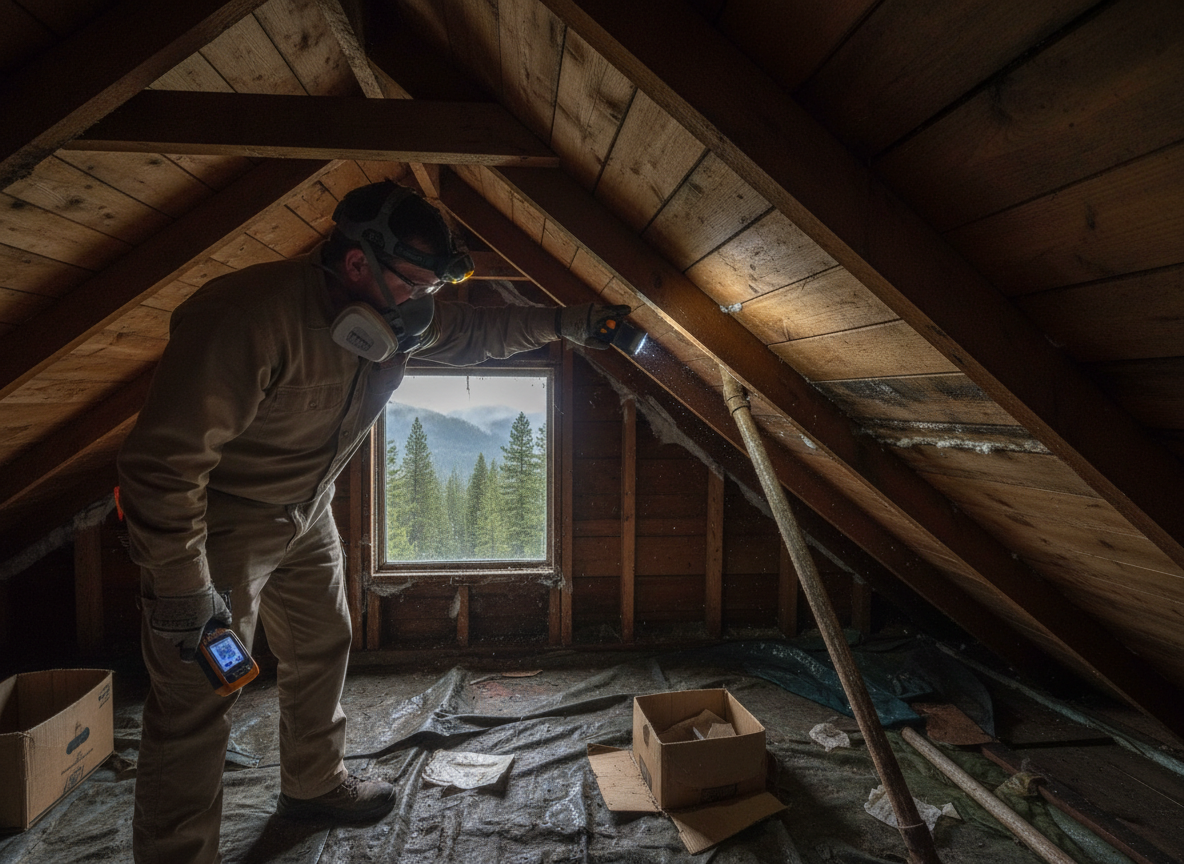
In older Cedarpines Park cabins, begin attic moisture checks by examining insulation for dark patches or ice crystals near the roof deck during winter months when temperatures drop below freezing. These signs often appear first along the north-facing slopes common in the San Bernardino Mountains, where snow lingers and melts slowly into roof valleys. Focus on areas around plumbing vents and chimney chases that penetrate the attic, as these points allow warm air to rise and create condensation when it meets cold roof sheathing.
Common Moisture Entry Points in Cedarpines Park Cabins
Older cabins built before 1970 in Cedarpines Park typically feature vented attics with limited insulation depth and single-pane roof windows that leak warm air upward. Snow accumulation on steep lots around Crest Forest Drive can drive meltwater under shingles during sunny afternoons after overnight freezes. Check rafter bays for staining where ice dams form along the eaves, especially on north exposures facing the San Bernardino National Forest. Inspect collar ties and ridge vents for gaps that allow wind-driven snow to enter during winter storms common between November and March. These entry points differ from flatland homes because the cool mountain climate keeps attics colder longer, turning minor roof leaks into widespread insulation saturation before detection.
Inspection Tools and Step-by-Step Process
Use a moisture meter calibrated for wood to probe rafters and sheathing at multiple points, recording readings above 16 percent as potential problem zones in the dry summer months when baseline humidity stays low. Shine a bright LED headlamp along the underside of the roof deck to spot daylight leaks through nail holes or cracked flashing around skylights. Measure insulation depth with a ruler in at least ten locations, noting compressed or wet batts near the access hatch that sits above the living space in most Cedarpines Park cabins. Walk the attic floor carefully on joists only, avoiding stored items that block airflow and trap moisture from bathroom exhaust fans venting directly into the space. Document findings with dated photos that include the address on Crest Forest Drive for reference during later professional evaluations.
Seasonal Effects of San Bernardino Mountain Climate
Snowy winters bring repeated freeze-thaw cycles that expand small roof penetrations and push water into attics along the ridges common in neighborhoods near Wildwood Park and Skyland. Once spring arrives, rapid warming can cause hidden ice to melt inside wall cavities, creating musty odors that drift down into bedrooms below. Summer monsoons add another layer when heavy afternoon rains overwhelm gutters on older cabins with shallow roof pitches. These patterns require checks after every major weather event rather than annual inspections alone, because the terrain funnels water toward foundations on steep lots around Lake Arrowhead and Crestline.
Linking Findings to Broader Water Issues
Attic moisture often connects to larger problems when roof runoff saturates crawl spaces or basements below, especially on the sloped lots typical throughout Cedarpines Park. Readers facing repeated issues should review Spotting Water Intrusion After Heavy Rains in the San Bernardino Mountains for patterns that start at the roof and travel downward. When insulation shows widespread saturation, consider attic mold remediation before spores migrate into living areas. Cost factors tied to mountain access and material removal appear in What Influences Repair Costs for Water Damage in Mountain Communities.
When Professional Assessment Becomes Necessary
If moisture readings exceed 20 percent on multiple rafters or visible mold covers more than 10 square feet, stop DIY inspection and contact a local team operating 24/7 from 21853 Crest Forest Dr. Persistent odors after ventilation attempts or stains that reappear within weeks signal ongoing roof or plumbing leaks that require extraction and drying equipment sized for mountain humidity swings. Technicians familiar with Cedarpines Park terrain can trace water paths that flatland methods miss, preventing escalation into water damage mitigation projects that affect entire cabin structures.